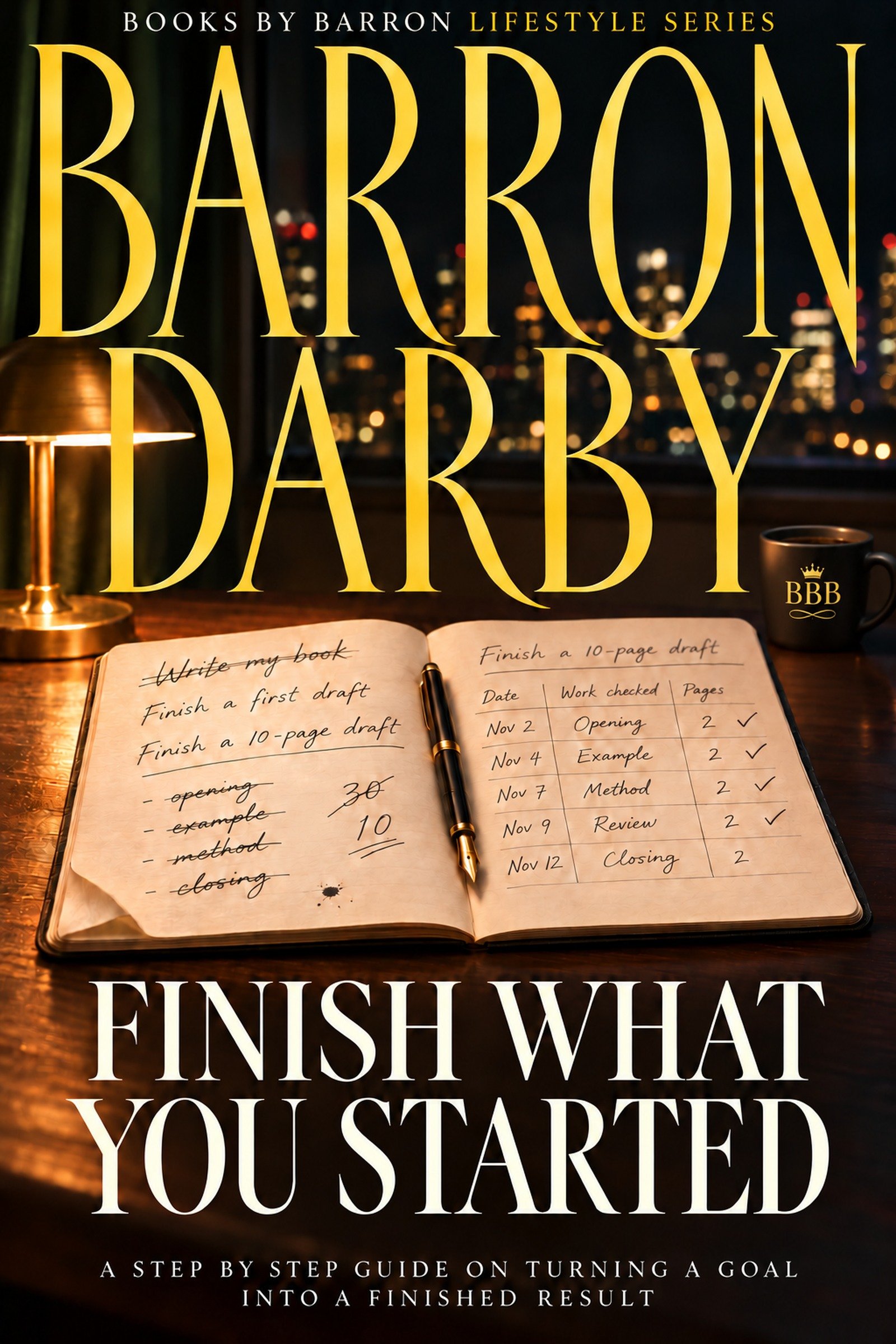
You open the note where you keep the things you want to improve. The old entries are still there, so you add another: learn something useful on the computer. Above it are the rooms you want to organize, the pictures you want to put into an album, and a project you keep meaning to finish. You close the note with more things listed, but no decision about which one you will work on next.
WHEN EVERY WISH BECOMES AN ASSIGNMENT
There is nothing wrong with wanting those things. The mistake begins when every entry becomes an active assignment simply because you wrote it down. Your note has no distinction between something you might pursue, something you have chosen, and something you must handle regardless. When you reopen it, you still have to make that distinction before you can begin.
Imagine that you open the computer to work on the album. You notice the untidy folders, decide to organize them, then find instructions for a computer skill you also want to learn. Each move has a reason, but the album has quietly disappeared from the work in front of you. This is an example of an unclear choice, not evidence about your character.
The answer is not to throw away the list or pretend that only one thing matters. You may have responsibilities that continue while you work through this book. You may also want several things deeply without having room to pursue them together. Giving an optional project a place on a list does not have to give it a claim on your next available opportunity.
There is another version of the same mistake: choosing a goal so broad that it contains the whole list. “Get my life organized” can quietly include every room, every file, every unfinished task, and every skill you wish you had. Nothing in that wording tells you where this particular piece of work ends. For the book’s exercises, choose one result with edges you can describe.
CHOOSE FROM WHAT YOU ALREADY HAVE
You need your existing list, somewhere to keep a short note, and access to enough information to describe the possible projects. Paper, a document, or a private voice recording will do. Use a method you can comfortably return to, with help from someone you choose if needed. You have no reason to buy a planning system before making this choice.
This is personal planning and record keeping for adults. Keep medical, psychological, financial, legal, and professional decisions outside this exercise, taking questions in those areas to an appropriately qualified professional. An immediate obligation remains an obligation even when another project is more appealing. Use an ordinary personal project here so the exercise can stay within its purpose.
In a research review drawing together laboratory and workplace studies, Edwin Locke and Gary Latham found that specific, challenging goals can improve performance when ability, commitment, resources, and feedback are in place. That review falls short of establishing that choosing a single project guarantees success. The selection procedure below is this book’s practical design, not a separately tested formula. Use it to make a clear choice you can inspect and revise.
One, copy the possibilities without accepting them all. Give this part of the note the name “Possible goals,” and include the wishes already competing for your attention. Keep their wording rough for now, since you are collecting candidates rather than writing a complete plan. If another idea occurs, put it here instead of automatically adding it to the work you have chosen. Stop when the list contains the choices you actually need to consider; you are not required to discover every ambition you have ever had.
Two, separate anything that needs handling regardless of this exercise. Mark it “Obligation,” then keep it with the arrangements you already use to handle responsibilities. In a worked example, “Return the borrowed drill as agreed” belongs here rather than competing with “Make a photo album.” Choosing the album does not cancel the arrangement to return the drill. If an obligation needs your attention now, handle it or make the necessary arrangement before continuing this optional selection.
Three, give each optional candidate a possible result and a reason. Ask, “What would I have when this piece was finished?” Then ask, “What use would that have for me?” Write the answers beside the candidate in ordinary words, without giving yourself a score. “Organize the house” might become “Organize one document folder so I can retrieve its contents,” with the reason “I want to find the instructions for things I own.” You have narrowed the work enough to compare it with another option.
A reason does not have to sound impressive to anybody else. For an album, it might be “I want to enjoy these pictures together instead of opening separate files.” For a computer task, it might be “I want to make a simple table without following an example.” Keep the reason connected to the proposed result, because “become a better person” will not help you choose between those tasks. The record is about what you want to make or do, not whether you deserve approval.
Four, name what is already available for each result. Include the material, access, tools, knowledge, and an opportunity to begin, using only what you can actually identify. “A laptop I can use, copied instruction files I can open, and a short available session” is a usable entry for the folder. “I will somehow find everything” leaves the resources unresolved. If help is necessary, distinguish someone who has agreed to help from someone you hope will agree. Record only the information needed for your own choice, keeping the note private unless you choose to share it.
If an opportunity to work is uncertain, write the uncertainty instead of building your choice around uninterrupted time. You might enter, “I can open the folder during an available home session, but I cannot promise how much sorting I will finish.” That can be enough to choose the folder for these exercises, because choosing the folder asks only that, and leaves the whole result unpromised for now. If even access to the folder depends on an arrangement that has not been made, name that arrangement as missing. Keep required assistance visible rather than describing the project as ready to do alone.
Here is a worked comparison, with all details invented to illustrate the procedure. The album entry reads, “Result: a small album from copied pictures. Reason: enjoy the pictures together. Available: blank album and copies I can open. Missing: the copied pictures I want from another collection.”
The folder entry reads, “Result: one document folder I can use to find instructions. Reason: retrieve those instructions when needed. Already done: copied the instructions for my desk lamp and radio into Home Instructions. Still unfinished: giving those working copies names that identify their contents. Available: my laptop, the copied files, and access to the folder.”
Five, choose an optional project you have already begun, with remaining work you can complete using what is available. If the larger project is too much for the available opportunity, name an unfinished part with its own useful result before doing the work, and keep the larger project marked unfinished. You are choosing work to finish, not awarding a prize to your most important ambition. In the example, the folder is selected because its working copies are already gathered and can be named and retrieved. The album still needs material from elsewhere.
Six, draw a visible boundary around the choice. Write “Chosen goal,” followed by the result, then add what belongs inside it and what stays outside. For the folder example, the entry reads, “Chosen goal: organize one document folder so I can retrieve its contents. Included: the working copies already in my Home Instructions folder. Outside this goal: other folders, original files, and general house organization.” The boundary makes clear which work you have accepted without requiring you to settle every later detail.
Seven, move the other optional candidates to a separate note called “Parked alternatives.” In this exercise, parked means recorded but not selected for the book’s work. Keep the original names so you can recognize the ideas if you later choose to reconsider them. Never assign them extra tasks just to soften the feeling of choosing one. The album can remain a worthwhile possibility without becoming an additional assignment, and learning computing can remain on that list without being hidden inside the folder project.
CHECK WHETHER THE CHOICE IS USABLE
Read your chosen goal aloud, then read the boundary beside it. You should be able to name one piece of work without joining several ambitions with “and.” That is a practical check on the choice, not a rule against the word itself. “Organize the folder and redesign the room and learn a new program” contains several projects, even if they share a theme. Keep the folder as the working choice and return the other ambitions to the alternatives.
Now check the actual materials behind the resource entry. In the example, you would confirm that the named folder exists and that you can open the working copies. There is no need to organize the files during this selection check. You are establishing that the project has something available to work on. If you discover an empty folder, change the resource entry rather than leaving “copies available” in place.
A usable selection note would let you return without having to choose the whole project again. It names the folder, explains why you want it organized, identifies the available copies, and excludes the rest of the computer. Its separate alternatives note holds the album and the broader computing wish. That completes the selection, but the chosen work remains unfinished. This chapter’s practical result requires the next step: finish the named piece, check its use, and keep a record of the result.
If every candidate needs something unavailable, change what you are choosing to accomplish first. Suppose the pictures for the album are on a device you cannot access, while the document copies are also out of reach. A workable first goal might be “Identify a permitted way to obtain the copied pictures.” Its result would be a clear access route or a recorded answer that access is unavailable. Keep the larger album on the alternatives note until you know whether it can proceed.
Never turn a request into an answer. If your first move is to ask the collection’s owner about access, record “Access requested; answer pending” until there is a reply. You have completed a request, but you have not obtained the pictures or confirmed permission. If there is no usable route yet, pausing the album is an honest decision. Choose another accessible project if one is available, without treating the missing access as a failure of commitment.
If the choice keeps expanding, return to the named object rather than rewriting your whole list. “Home Instructions folder” gives you something specific to point to when you notice another untidy folder. Leave that other folder outside the current work unless new information gives you a reason to change the boundary. Record any deliberate change so the note still describes the work you have chosen. Do not keep reopening an unchanged choice simply to produce another check mark.
If the note is clear but the work cannot proceed, identify what is missing. Perhaps the available session disappeared, or an operation requires an explanation. Seek the missing information or record a pause. A polished selection note cannot supply an opportunity you do not have, and a pause does not count as finishing the chosen work.
FINISH THE PIECE YOU SELECTED
Eight, complete the remaining work on the piece you chose. Write its stopping condition first so you cannot quietly shrink it afterward. For the invented folder example, use, “Both copied instruction files have names that identify their contents, and I can open the intended instructions from each name.”
Open each working copy to identify it, then use your device’s rename control to give it a plain name such as “Desk Lamp Instructions” or “Radio Instructions.” Keep any file ending, such as .pdf, unchanged, and leave the original files untouched. If you do not know how to rename a copy on your device, obtain that instruction before continuing.
Check the changed folder by opening each copy from its new name. If a name leads to the wrong instructions, correct that name and check the affected copy. Once both names lead to the intended contents, the example folder meets its stated finish. Stop checking unless a new problem gives you a reason to return.
The example completion note reads, “Finished piece: Home Instructions folder. Changes: named the working copies Desk Lamp Instructions and Radio Instructions. Check: each name opened the matching instructions. Other folders and general house organization remain outside this result.” Write such a note only after doing the work and checking the actual copies.
TAKE THE NEXT STEP
Tomorrow, return to an ordinary personal project you have already begun. Use the selection steps to name the unfinished piece you will complete, its boundary, and its stopping condition. Do the remaining work, check the result against that condition, and record what finished. If a missing resource prevents completion, record the piece as unfinished and name the obstacle.
SAVE THE EVIDENCE
Keep the completed work and its completion note where you can find them. Preserve the selection note so the original boundary remains visible. In the example, the evidence is the named working copies together with the record of opening their matching contents. The selection note alone establishes only what you chose.
MAKE THE CALL
Mark the named piece finished when its stated condition is met. Correct a specific defect when the check reveals one, or pause when the necessary information or access is missing. Keep any larger project unfinished unless its own remaining work is also complete.
KEEP THE CLAIM HONEST
Describe only the result you completed and checked. Finishing this folder does not establish that the rest of the computer is organized or that another project will succeed. If you stopped after choosing, record that accurately: the selection is complete, but the chosen work remains unfinished.