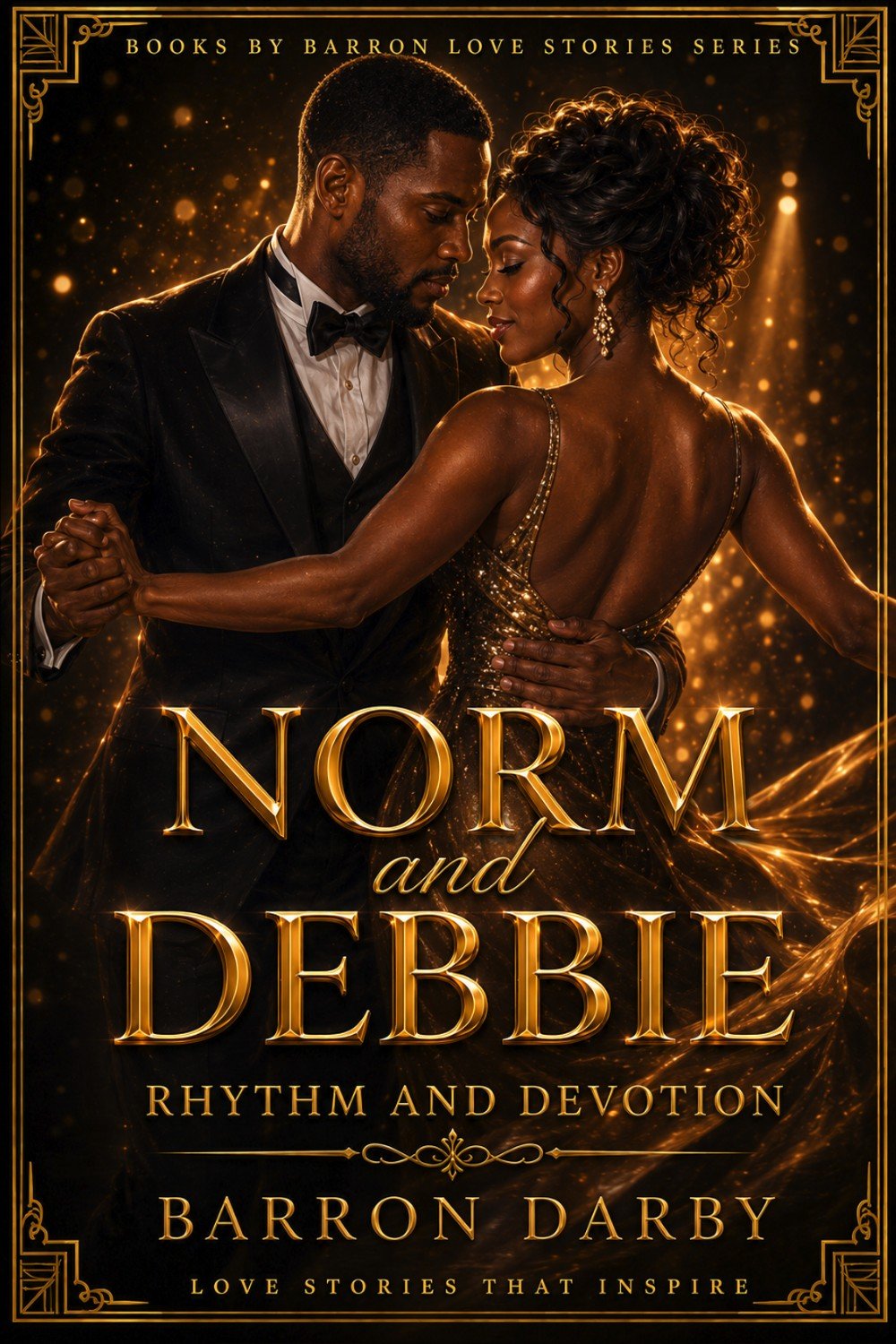
Chapter one is read by Jessica Anne Bogart. To read or listen to the whole book, buy the eBook and follow the reading and listening instructions beside the cover.
It is a Sunday morning in spring, two thousand twenty-six, in a house in Los Angeles, and one of the greatest choreographers America has ever produced is standing in her kitchen, trying for the ten-thousandth time to teach her husband a simple step, while he, a two-time N B A champion, fails at it completely.
There is a coffee mug going cold on the kitchen counter. The dishwasher is humming, the cereal bowls are still on the breakfast table, and the laundry is waiting by the door. Music is playing low, because in this house there is always music. The woman who taught a nation to dance on the television show Fame is, this morning, defeated by the one man on earth she cannot choreograph, and she is laughing too hard to keep teaching.
The man missing the step is Norm Nixon. The woman laughing is Debbie Allen. The world knew him as a lightning-fast Lakers point guard and her as the fierce dance teacher who promised that fame costs sweat. Together, across forty-two years, they have been the great proof that the best partner is not the one who matches your rhythm, but the one who can make you laugh when you cannot find it.
I will tell you what this book is. It is the story of a quiet basketball player from Macon, Georgia, and a Houston firebrand from Houston, Texas, who met on a movie set in nineteen seventy-nine, married in nineteen eighty-four, and built a dynasty of dance and family and love.
He still cannot dance one step. She is America's greatest dance teacher. The marriage came out perfectly anyway.
A word about how this book is told, because it is told in two voices that could not be more different and have somehow harmonized for four decades and more. One belongs to Debbie, the force of nature, the loudest and most electric presence in any room she has ever entered, a woman who moves through the world like choreography and says exactly what she thinks. The other belongs to Norm, the quiet champion, a man of few words who let a basketball do his talking for a decade and still prefers to listen rather than perform. They will take turns, chapter by chapter, the way they have taken turns at everything, one leading while the other holds steady, and the contrast between them, the firebrand and the still water, is not a problem the marriage overcame, it is the entire reason the marriage works. When Debbie's version of a memory is loud and Norm's is quiet, that is not a contradiction, that is just the two of them, telling the same love story in the two completely different rhythms that have, against every expectation, been playing the same song since nineteen seventy-nine.
There is a reason a love story like this one is worth telling, and it is not the championships or the famous dance academy. The culture sells us a single idea of what a great couple looks like, two people perfectly in sync, matched in temperament and rhythm and pace, finishing each other's sentences. Norm and Debbie are the living refutation of that idea. They are about as mismatched as two people can be, opposite in nearly every measurable way, and they have built one of the most durable and joyful marriages anyone could point to, lasting four decades and counting. They are proof that compatibility is not sameness, that the deepest and most lasting love is often forged between two people who could not be more different, who never try to convert each other, who simply let the contrast be the music. We tell their story because the world needs at least one example of a couple who lasted not by matching but by celebrating the mismatch, the loud and the quiet, the dancer beside the floor, harmonized across forty-two years into a single, unlikely, beautiful song.
A word about the privacy in this book, because it shapes how it is told. Norm Nixon and Debbie Allen have lived much of their lives in public, his on basketball courts and hers on stages and screens, but the marriage itself they have largely kept to themselves, sharing the broad, joyful truth of it, the dancing, the mismatch, the laughter, without ever turning their private life into a spectacle. We have honored that here. Nothing private has been invented. Their inner voices in these pages are a respectful imagining, built from what they have actually said in interviews across the decades, the meeting on the film set, the championship years, the founding of the Academy, and the running family joke, told by Debbie herself with enormous affection, that Norm simply cannot dance. Their children are named only as the public record names them. Where their private life stays private, this book stays private with it, offering a portrait drawn with care and respect from the outside, a tribute to two people whose long love has been lived, mostly, in the parts of life the cameras never reach.
PART ONE.
The Set.
That is chapter one.
Follow the reading and listening instructions beside the cover to continue with the whole book.
BUY THE EBOOK · $3.99